
White Rhino, Community Land and a World First in Zimbabwe
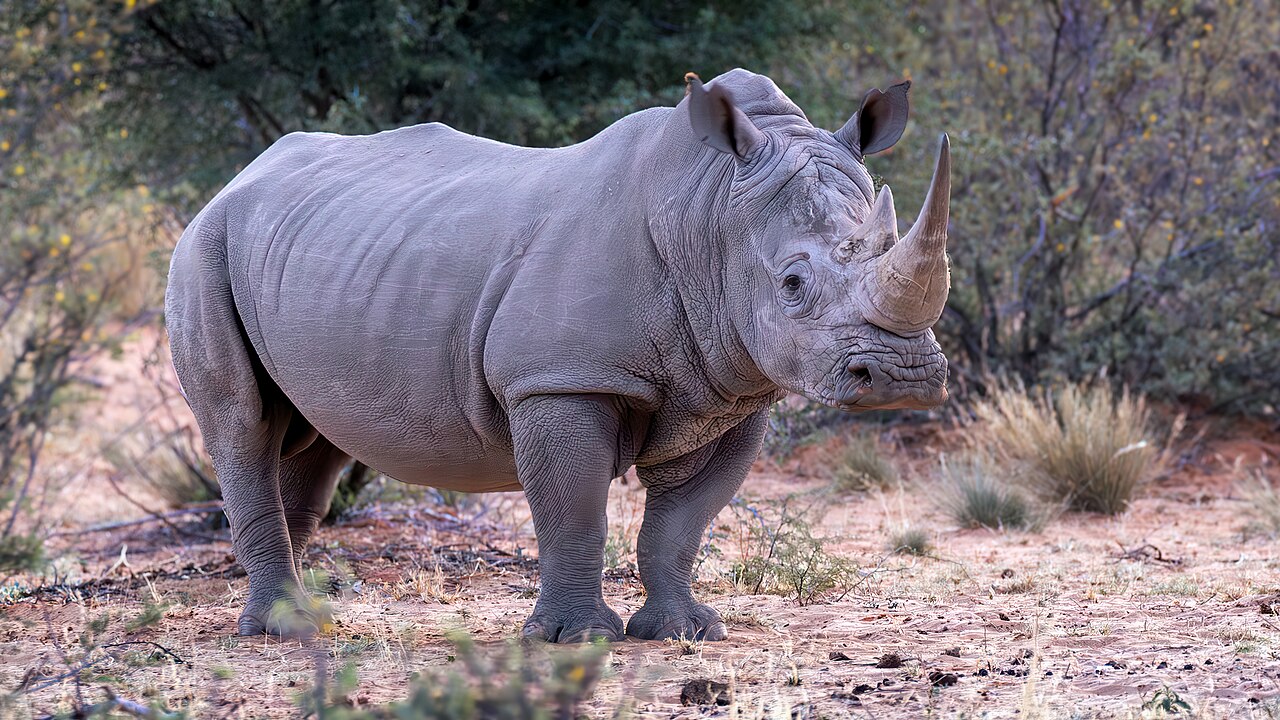
How a world-first conservation initiative in Zimbabwe’s Tsholotsho District is rewriting the relationship between local communities and the wildlife that shares their land.
In the 1980s, Hwange National Park in Zimbabwe was home to several hundred rhinoceros — around 120 of them white rhino who thrived in the park’s vast stretches of open grassland. Twenty-odd years later, poaching had decimated the population entirely. The absence of this soulful and solitary creature has been felt like a hollow crater in the hearts of those who care. What happened next is one of the most exciting conservation stories in Africa right now.
The Park Itself
Hwange is Zimbabwe’s largest national park – 14,651 square kilometres of largely flat terrain in the northwest of the country, positioned between Bulawayo and Victoria Falls and sharing a long border with Botswana. It is one of Africa’s last great wildlife sanctuaries, home to the Big Five, more than 400 bird species, 19 large herbivore species and some of the continent’s most significant elephant herds. In all, a population that now exceeds 45,000 animals.
Hwange has no large lake or river providing a natural water source. The park’s famous waterpans, many of them hand-dug by its first warden, Ted Davidson, in 1928, are what make the game viewing here so extraordinary. Animals arrive in their thousands at dusk, drawn by the water, creating dramatic scenes of animals interacting and revelling in the bliss of water.
The land the park occupies has a human history as long as its wildlife one. San bushmen hunted and gathered here for tens of thousands of years. In the nineteenth century it became the royal hunting ground of the Matabele king Mzilikazi. When the reserve was established in 1928, it was declared unsuitable for farming – poor soils, scarce water – and the people who had lived on it were moved off it. That displacement shaped the communities that border the park to this day.
The People of Tsholotsho
The district that borders Hwange to the south-east is called Tsholotsho – a name that comes from the San word Tsoro o tso, meaning “head of an elephant”. It is a fitting inheritance. The people of the region are predominantly Ndebele, with communities of Kalanga who have lived in this part of Zimbabwe for over a thousand years, and a small, ageing population of Tshwa San – fewer than 2,500 in all of Zimbabwe – many of whom were forcibly removed from their ancestral land when the game reserve was founded. Their language, Tjwao, is spoken by only a handful of elders today.
Livelihoods in Tsholotsho are built on rain-fed agriculture – sorghum, millet and maize – and animal husbandry. These are communities that have lived beside one of Africa’s greatest wildlife areas for generations, with little formal benefit from it, and who have carried the costs of that proximity such as crop raids, livestock predation, and the daily negotiation between human need and wild space without adequate recognition or resources. The idea of viewing game from a vehicle is for most, a completely alien concept.
The Paradigm Shift The Community Rhino Conservation Initiative (CRCI) is a partnership between an independent operator Imvelo Safari Lodges, the Zimbabwe Parks and Wildlife Management Authority, local Rural District Councils, and the traditional leaders of communities on the south-eastern edge of Hwange. Its premise marks a fundamental shift in how conservation is conceived: rather than establishing rhino sanctuaries within a government park or on private land, CRCI places rhinos onto community land, with local communities as their custodians. This is a world first for white rhino.
In May 2022, the first two white rhino bulls – Thuza and Kusasa – completed a 750-kilometre journey from Malilangwe Reserve to reach the Ngamo Rhino Sanctuary in Tsholotsho District. They could not have known what they represented. For CRCI, that date is foundational, it’s the moment their vision became real. Since then, a second sanctuary has been established at Mlevu, and a third is ready to receive animals in 2026.
The Model
The logic of CRCI is elegantly self-sustaining. Tourism revenue supports communities, communities invest in protecting wildlife, and a healthy rhino population builds the long-term future of conservation and tourism in the region. Imvelo employs more than 40 local people as community wildlife protection scouts, this is a highly trained unit known proudly as the Cobras, responsible not only for rhino security but also for anti-poaching, conservation education, wildfire prevention and reducing human-wildlife conflict. Since September 2022, the rhinos have required no supplementary feeding — a sign that the ecosystem is holding them.
Hwange is now, once again, a Big Five destination. The return of the white rhino – to community land, under community custody – has restored something more than a species. It has rewritten the terms of the relationship between the people of this region and the wildlife that shares it. The long-term vision encompasses more sanctuaries, more animals, and a model that communities across Zimbabwe – and Africa – might replicate.
anti-poaching, Bucket list travel, community health, community project, connection, conservation, Conservation-led experiences, Couple and friendship getaways responsibility, Cultural discovery, curiosity, humanitarian, Hwange National Park, Leadership development, lodges, Restorative retreats, rhino, Sabbaticals & life transitions, School expeditions, Zimbabwe